
When I returned to the U.S. after my semester abroad in Chile (which was 16 years ago, but who’s counting?), I visited with a mentor of mine. Kathleen was the founder and executive director of a local immigrants’ rights organization where I had interned the summer prior to my travels. I returned at Kathleen’s request, as she was interested to hear about my experiences abroad. I remember sitting with her on the second floor of her home, which was also her office and the headquarters of her grassroots operation. We chatted while she sorted through papers, and at some point during the conversation, she paused the shuffling to look at me and said, “You seem so relaxed.” In that moment, she pinpointed something about me that I had been feeling, but hadn’t fully recognized.
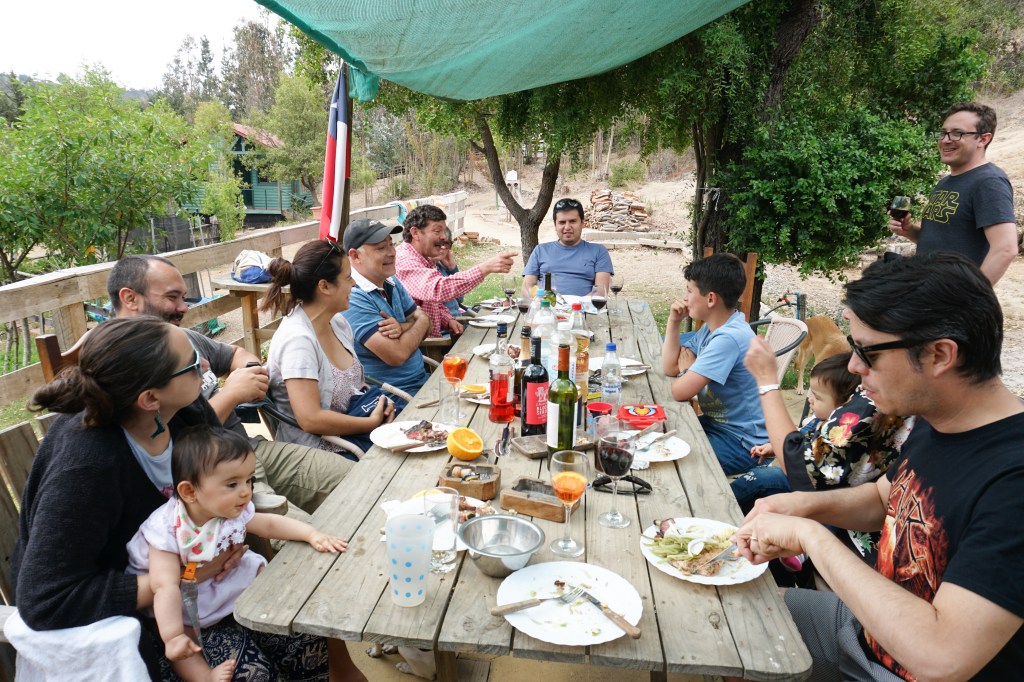
A few weeks prior, while I was still in Chile and imagining my return to life in the U.S., I spent a lot of time thinking about how I would respond to all of the people who would ask the very obvious and excruciatingly simple question: “How was it?” It felt so important to have the right answer. I scanned my brain for one perfectly descriptive and incisive word that could magically sum up 6 months of my life in a foreign country and my first experience abroad. I searched as tirelessly for that one word in the same way I would eventually labor over choosing my children’s names. I never came up with the right answer, and instead handed out predictable responses like, “great,” “amazing,” and “wonderful.”
It wasn’t until just yesterday, while driving on the highway from the countryside back to our apartment in Viña, thinking about my current life here and that moment with my mentor so many years ago, that the answer suddenly came to me. The word that would have summed up many of my experiences then, and describes how I often feel now. The word that would have prompted more questions and deeper conversation. The reason that I seemed, and indeed was more relaxed upon my return, was that I had spent so long feeling uncomfortable.
It’s uncomfortable living in someone else’s home. It’s uncomfortable figuring out a new school system. It’s uncomfortable getting lost in a foreign country. It’s uncomfortable making new friends. And the most uncomfortable part is trying to navigate all of those uncomfortable experiences in a language that you are not comfortable with.
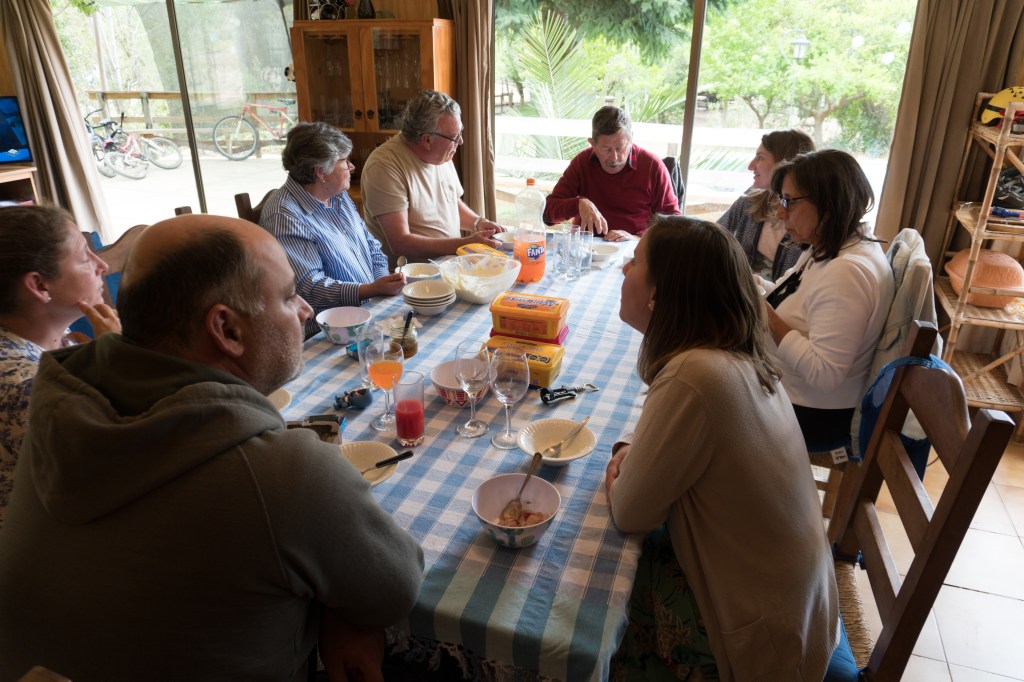
This time around, I am much more comfortable with every aspect of life in Chile, except for my relationship with Spanish. Although I have continuously exercised my language skills – through conversations with neighbors and family members, in working with clients at an immigration law firm, and by teaching Spanish to my own children – here I am two months into life in Chile and I feel like I’ve hit a wall. I’m back in this uncomfortable place where I still get lost in group conversations, where I’m repeatedly distracted by trying to deduce the meaning of a word I don’t know or figuring out how to express myself in the lack of a certain word, where I’m hesitant to participate, where I’m not quite myself.
It’s frustrating to be back in that space, but I know that there are some things I can do to get comfortable more quickly. Here’s what I’m working on for now, with other plans on deck for when the kids start school in March.
Read in Spanish This may seem obvious, but I don’t do a lot of reading in Spanish. I generally read at the end of the day as a way to unwind, and I’m not looking to study. Now that I have found my face smooshed up against this language barrier again, I am trying to convert all of my English reading to Spanish reading. As you may recall from this post, I fell in love with the Feria Internacional del Libro, so I was happy to return again and again in search of the right books to add to my library. I chose non-fiction books, as I tend to pick those up more often during the day, and only those written originally in Spanish (not translated).
I also planned to subscribe to the local newspaper, but ultimately decided against it because newspaper reading is not my favorite thing, even in English. So I was pretty excited when I found a shopping cart full of recent newspapers in the basement of our building. I sorted through the papers and pulled out all of the special weekend magazines, which I do like reading, and now have a good selection of enjoyable, topical and relevant reading at my fingertips.
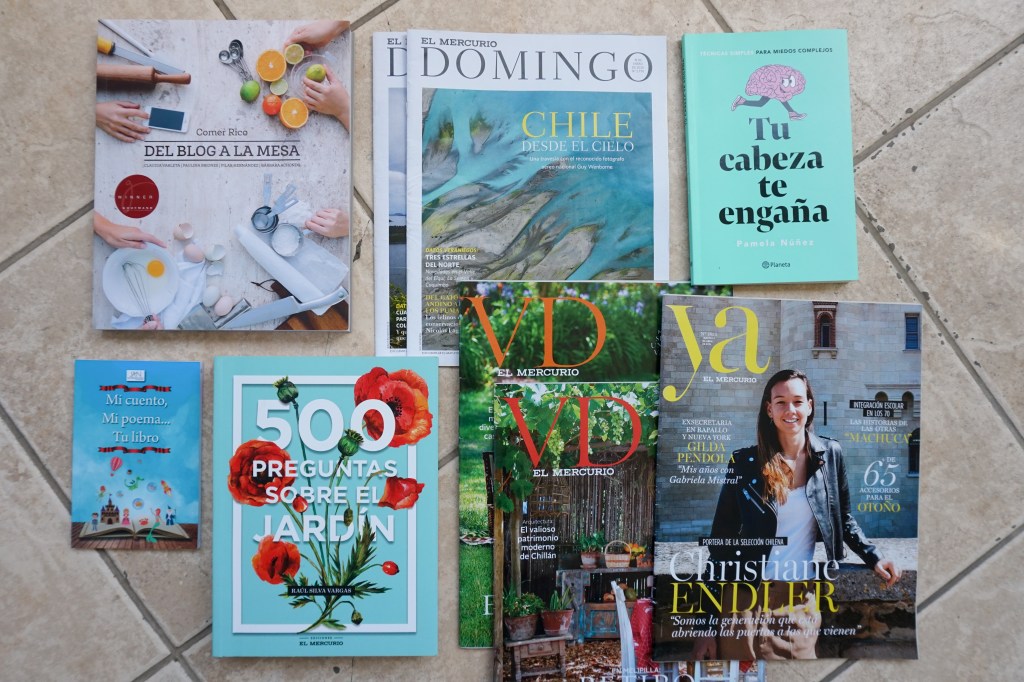
Bottom Row: Mi Cuento, Mi Poema, Tu Libro, 500 Preguntas Sobre el Jardin, Revista El Mercurio VD, Revista El Mercurio Ya
While I read, I underline the words I don’t know and look them up on the SpanishDict Translator app on my phone. In addition to getting the translation, I can save the words to lists and then get quizzed on them later, which helps really helps with the in-one-ear-out-the-other problem I seem to have otherwise.
Switch Phone to Spanish This is a simple switch, but it keeps me in the mental space of Spanish (or returns me there if I’ve wandered off into English again). And because I’m so familiar with my phone and all of the apps in English, it’s an easy way to learn all of the very important phone-related terminology like, “update”, “swipe”, “review”, “block”, and “like”. The biggest change, and the one that can be tricky is GPS navigation in Spanish. When I’ve taken a wrong turn, and I have to turn off the radio and the kids to listen to the directions closely, and that robotic female voice starts barking at me in Spanish, I’m not happy, but it’s definitely a learning experience.
Make More Mistakes I find this to be the absolute best way to learn. After announcing to my host family that I was deaf instead of left-handed, I have never again confused the words sorda and zurda again. After fumbling around with the word for “sausage” this weekend, I can now refer to it as longaniza instead of longan-whatever. And, as I was typing this post for my Instagram account, I learned BEFORE posting (win!) that a lo gringo in Chile means being without underwear, and not doing something “like a gringo,” as I was planning to use it. The fear of making mistakes often prevents me from speaking up. But I’ve realized that the majority of my mistakes aren’t that embarrassing, and the more mistakes you make, the less embarrassing it becomes.
Be Realistic (AKA Stop Comparing Myself to My Husband) My Chilean husband speaks flawless, perfectly natural, fluent English without a hint of an accent and with better vocabulary than me. He is 100% bilingual and it is 1,000% frustrating to compare my abilities in Spanish to his mastery of English. I shouldn’t do it and I need to stop. He learned English by living abroad at a young age, just like our children are doing now. While I may never be as fluent as he is, I know I can be more comfortable. And I look forward to being frustrated by my own children’s fluency exceeding mine – which I believe will happen pretty quickly.
 True Story: Chile
Great post 😁
LikeLike
I LOVE THIS!!! And I love your honesty and courage! 😘
You could also just drink more wine! That’s when my near native fluency really kicks in!
LikeLike
Hahaha! That’s totally true! And I was drinking a lot more the first time around 🙂
LikeLike
And thank you for leaving me comments – you’re the best!
LikeLike
I love your writing, thoughts and insights. Reading these posts help me with my feelings of missing your family so much. I am so very glad you decided to do these writings and reflections because for me these are hugs over the internet with my beautiful daughter
LikeLike